
The Rise of Penang in the Global Semiconductor Supply Chain
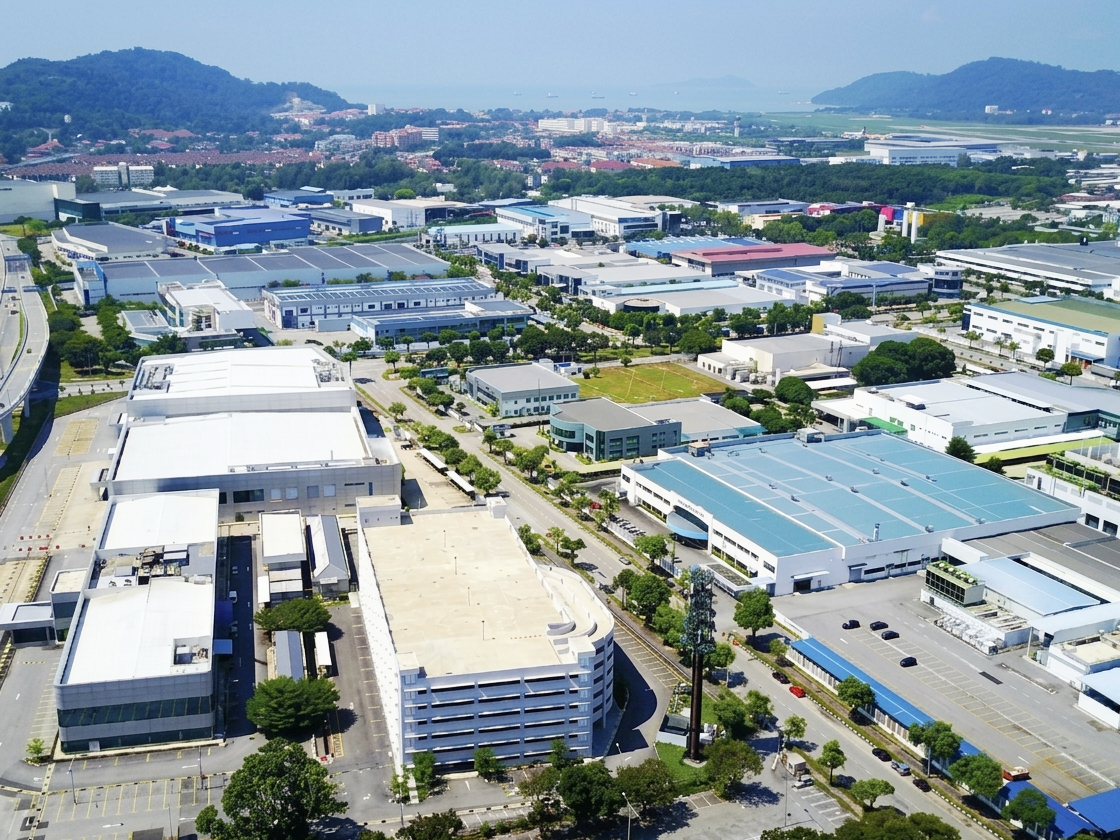
From Economic Collapse to Semiconductor Powerhouse
In 1969, Penang lost its free port status, leading to a sharp economic decline and a surge in unemployment. No one could have imagined that, decades later, it would become one of the key hubs in the global semiconductor supply chain.
Building Penang’s Semiconductor Ecosystem
Penang’s semiconductor industry did not emerge overnight. It was built gradually over several decades through the development of a complete industrial ecosystem. As early as the 1970s, Intel had already established operations in Penang. This was later followed by global technology giants such as AMD, Bosch, Renesas, Keysight, Micron, Broadcom, and Lam Research.
Over the decades, Penang gradually developed a semiconductor ecosystem that is extremely difficult to replicate. This includes engineering talent, equipment suppliers, automation companies, precision component manufacturers, logistics providers, packaging and testing facilities, as well as material supply chains — all highly concentrated within the region. Today, Penang is home to more than 350 multinational corporations and thousands of local supply chain companies.
Why Penang Is Difficult to Replicate
Once a semiconductor ecosystem is established, it becomes very difficult for latecomers to catch up. What is truly hard to replicate is not merely the factories, but the accumulated talent, experience, and supply chain networks built over decades.
This is also why, despite many countries aggressively developing their semiconductor industries, international companies continue to invest heavily in Penang.
Penang’s Current Limitation
However, Penang’s semiconductor industry also faces clear limitations. At present, most companies remain concentrated in backend semiconductor activities such as assembly, testing, and packaging. These processes take place after chips are manufactured and involve cutting, packaging, assembly, testing, and validation.
While these stages are indispensable, their profit margins and technological control remain lower than those of chip design and advanced wafer fabrication. The most profitable and strategically critical technologies are still largely dominated by the United States, Taiwan, and South Korea.
As a result, Penang’s biggest challenge is this: if it remains focused mainly on lower value-added backend manufacturing, it may face limited profit growth, slower wage growth, and increasing competition from lower-cost countries in the future.
A New Opportunity Amid Global Tensions
In recent years, however, Penang has also gained new opportunities. As tensions between the United States and China continue to rise, American companies worry about overdependence on China, while Chinese companies worry about restrictions imposed by the United States. This has led to a global restructuring of semiconductor supply chains — and Penang has emerged as one of the few regions capable of attracting investment from both American and Chinese companies.
The Cyclical Nature of Semiconductors
At the same time, it is important to remember that the semiconductor industry is highly cyclical. During boom periods, companies aggressively expand production capacity; during downturns, the industry may face excess inventory, collapsing orders, layoffs, and even factory closures.
Over the past several decades, the semiconductor industry has repeatedly gone through cycles of “boom, expansion, oversupply, collapse, and recovery.”
Nevertheless, Penang remains in a strategically important position within the global technology race.
Penang’s AI Future
Hopefully, with the rise of AI, Penang can evolve from being a world-class assembly and testing hub into a leading center for advanced semiconductors and technological innovation.
This is also why the Penang Digitalisation-AI Conference & Exhibition (PDX2026) is becoming increasingly important. PDX2026 is not just an exhibition, but a signal: AI is no longer just a future trend.
How businesses reposition themselves will become a key factor in determining future competitiveness.
Alex Lee | Content Contributor PDX2026 Penang Digitalisation-AI Conference & Exhibition
#PDX2026 #PDX #PenangDigital #AIConference #AIExhibition