
Malaysia Does Not Have an Industry 4.0 Problem. It Has a Clarity Problem
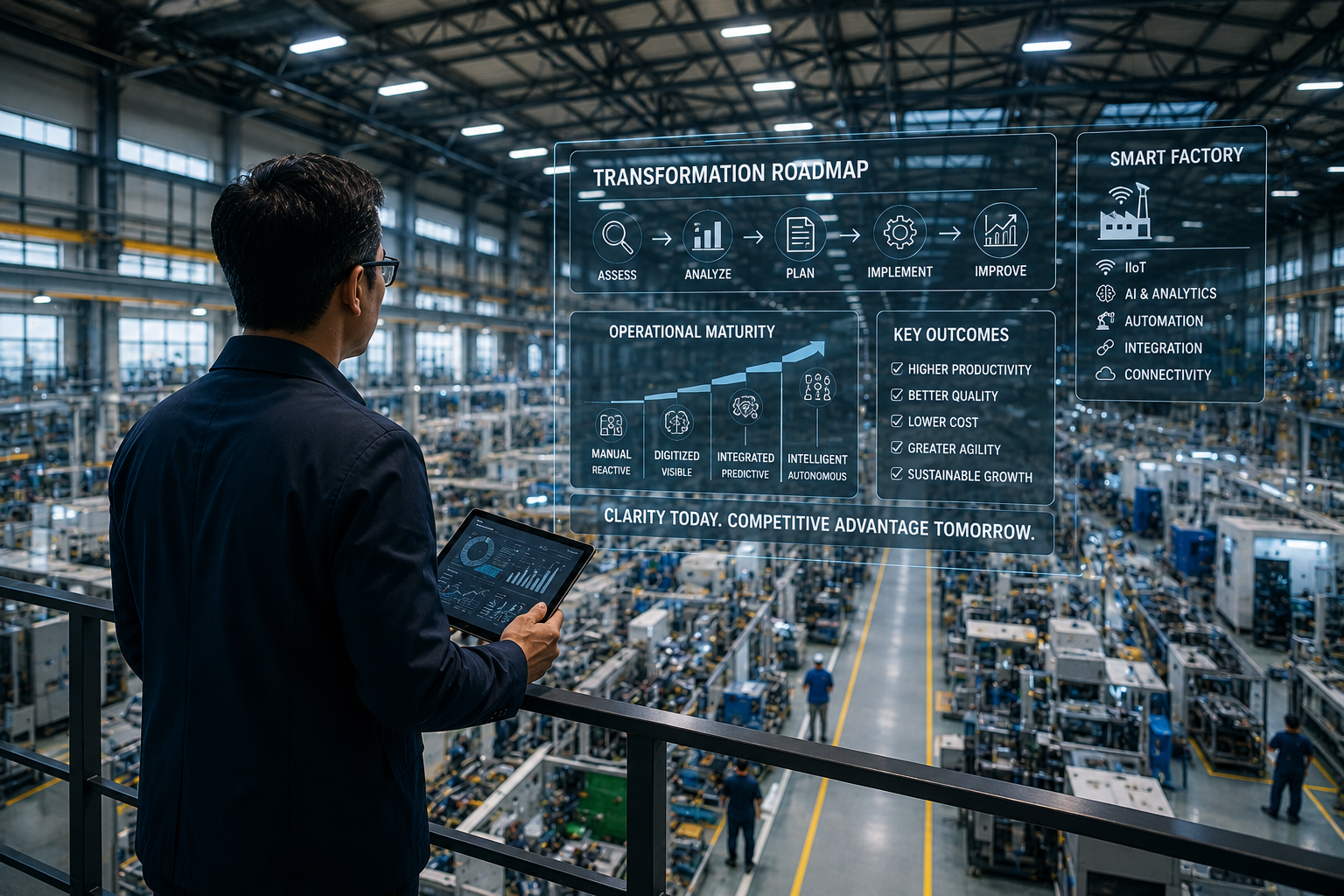
Malaysia Does Not Have an Industry 4.0 Problem. It Has a Clarity Problem.
By Ts. Lukas J. Tan
Founder of PDX2026 | CEO of OPERION | AI Educator & Digitalisation Strategist
Executive Summary
For more than a decade, Malaysia has actively promoted digital transformation, smart manufacturing, automation, and Industry 4.0 adoption. Government agencies have introduced incentives, grants, readiness assessments, and strategic roadmaps. Technology vendors continue to introduce new solutions. Industry leaders regularly discuss Artificial Intelligence, Industrial Internet of Things (IIoT), robotics, predictive maintenance, cloud computing, and data-driven manufacturing.
Yet despite growing awareness, many organisations continue to face the same challenge.
They know transformation is necessary.
They know technology is advancing.
They know competitors are evolving.
But they remain uncertain about where to start.
This raises an important question.
Does Malaysia really have an Industry 4.0 problem?
Or does it have a clarity problem?
After years of working with SMEs, manufacturers, technology providers, and business leaders, I have become increasingly convinced that the greatest obstacle to transformation is not technology availability.
The greatest obstacle is the absence of a clear roadmap.
Technology is abundant.
Clarity is not.
The Industry 4.0 Conversation Is Getting Louder
Over the past few years, Industry 4.0 has become one of the most frequently discussed topics in manufacturing and business transformation.
Almost every conference includes discussions about:
Artificial Intelligence.
Automation.
Smart factories.
Industrial IoT.
Machine connectivity.
Predictive analytics.
Digital twins.
Cloud platforms.
Advanced robotics.
These technologies promise significant improvements in productivity, efficiency, visibility, and competitiveness.
The message is clear.
The future of manufacturing will be increasingly digital.
However, awareness alone does not create transformation.
In fact, growing awareness sometimes creates a new problem.
Information overload.
Many business leaders are now exposed to hundreds of technology solutions, competing recommendations, and conflicting priorities.
Every vendor claims to have the answer.
Every platform promises transformation.
Every consultant offers a different framework.
Instead of creating confidence, this often creates uncertainty.
The result is not action.
The result is hesitation.
The Real Challenge Is Not Technology
One of the biggest misconceptions surrounding Industry 4.0 is the belief that organisations are struggling because technology is unavailable.
The reality is the opposite.
Technology has never been more accessible.
Today, businesses can access:
- Cloud systems
- ERP platforms
- AI applications
- Automation tools
- Industrial sensors
- Manufacturing analytics
- Business intelligence dashboards
- Robotics solutions
Compared to ten years ago, the barriers to adoption have fallen dramatically.
The challenge is no longer access.
The challenge is prioritisation.
Leaders are asking:
Which technology should come first?
What problem should we solve first?
What investment creates the highest impact?
How do we avoid expensive mistakes?
Without answers to these questions, technology becomes overwhelming rather than empowering.
Why Many Industry 4.0 Projects Struggle
Across different industries, the symptoms often look different.
However, the root causes are remarkably similar.
Some manufacturers invest heavily in automation equipment while continuing to manage production data through spreadsheets.
Others deploy sophisticated software platforms without first standardising operational processes.
Some organisations purchase advanced technologies simply because competitors are doing so.
Others delay transformation entirely because they fear investing in the wrong solution.
While these situations appear unrelated, they all point to the same issue.
A lack of strategic clarity.
Technology implementation becomes difficult when organisations are uncertain about their destination.
Without a roadmap, every technology decision feels risky.
Without clear objectives, success becomes difficult to measure.
Without alignment, transformation efforts become fragmented.
This is why many projects fail long before implementation begins.
The problem is not execution.
The problem is direction.
Understanding the Difference Between Digitalisation and Industry 4.0
One reason confusion exists is because many organisations use the terms “Digitalisation” and “Industry 4.0” interchangeably.
In reality, they are not the same.
Digitalisation is the broader business transformation journey.
Industry 4.0 is one component within that journey.
Digitalisation may include:
- ERP implementation
- Customer experience improvement
- Workflow automation
- HR transformation
- Finance system integration
- Data visibility
- Cloud adoption
- Process standardisation
Industry 4.0 focuses more specifically on manufacturing intelligence.
This includes:
- Smart factories
- Industrial IoT
- Machine connectivity
- Predictive maintenance
- Manufacturing analytics
- Robotics
- AI-driven production systems
Understanding this distinction is critical.
Many organisations attempt to implement Industry 4.0 technologies without first establishing the digital foundations required to support them.
As a result, sophisticated technologies end up sitting on weak operational foundations.
Why Foundations Matter More Than Technology
Imagine constructing a twenty-story building.
Most people focus on the visible structure.
The glass exterior.
The architecture.
The design.
Yet the true strength of the building lies beneath the surface.
Without a strong foundation, even the most impressive structure becomes vulnerable.
Digital transformation follows the same principle.
Before organisations deploy advanced AI systems or automation technologies, they must establish:
Reliable data.
Standardised workflows.
Operational visibility.
Management alignment.
Process consistency.
Without these elements, technology often amplifies existing problems rather than solving them.
AI cannot fix poor data quality.
Automation cannot fix broken processes.
Dashboards cannot fix inconsistent decision-making.
Technology accelerates whatever already exists.
If the foundation is strong, technology creates leverage.
If the foundation is weak, technology creates complexity.
The Rise of AI Is Increasing the Pressure
The emergence of Artificial Intelligence is accelerating the urgency surrounding Industry 4.0.
For many years, businesses could delay transformation without significant consequences.
That window is closing.
AI is increasing productivity expectations across every industry.
Competitors can automate faster.
Data can be analysed more efficiently.
Decisions can be supported with greater intelligence.
Customer expectations continue to rise.
As AI capabilities improve, organisations with strong digital foundations gain even greater advantages.
Meanwhile, organisations that remain dependent on manual processes may find themselves falling further behind.
This is not because AI is replacing businesses.
It is because AI rewards operational maturity.
The organisations that benefit most from AI are usually the organisations that already have structure, clarity, and discipline.
Malaysia’s Opportunity Is Bigger Than Manufacturing
Malaysia possesses significant advantages in the Industry 4.0 landscape.
The country has:
- Strong manufacturing capabilities
- A growing semiconductor ecosystem
- Skilled engineering talent
- Government support programmes
- Strategic regional positioning
Particularly in Penang, manufacturing continues to evolve beyond traditional production models.
The rise of semiconductors, automation, AI infrastructure, advanced packaging, and smart manufacturing is creating new opportunities throughout the ecosystem.
However, capital investment alone is not enough.
Technology adoption alone is not enough.
The next phase of growth requires organisations to become more strategic about transformation.
The winners of the next decade will not necessarily be the companies that spend the most money.
They will be the companies that create the most clarity.
The Three Questions Every Leader Must Answer
Before investing in Industry 4.0 technologies, every organisation should answer three fundamental questions.
Where are we today?
Many companies underestimate the importance of understanding their current maturity level.
Transformation begins with visibility.
If leaders cannot clearly identify operational weaknesses, technology investments become guesswork.
Where do we want to go?
Different organisations require different outcomes.
Some seek productivity improvements.
Others focus on quality control.
Some prioritise cost reduction.
Others aim to improve scalability.
Without clear objectives, technology becomes disconnected from business value.
What should happen first?
This may be the most important question.
Transformation is not about doing everything at once.
It is about sequencing investments correctly.
The most successful organisations focus on the next logical step rather than attempting to implement every technology simultaneously.
Why the Future Belongs to Companies With Clarity
As global competition intensifies, manufacturers will continue facing pressure to modernise.
The future will undoubtedly include:
Artificial Intelligence.
Automation.
Smart manufacturing.
Connected operations.
Real-time analytics.
Predictive systems.
These technologies are no longer optional.
However, technology alone will not determine success.
The most successful organisations will be those that understand how each technology supports a larger business objective.
They will invest with purpose rather than fear.
They will transform with strategy rather than urgency.
They will prioritise clarity before complexity.
This is why I believe Malaysia does not have an Industry 4.0 problem.
The technologies already exist.
The vendors already exist.
The incentives already exist.
The awareness already exists.
What many organisations need most today is clarity.
Clarity about their current position.
Clarity about their future direction.
Clarity about the roadmap connecting both.
Frequently Asked Questions
What is the difference between Digitalisation and Industry 4.0?
Digitalisation refers to the broader transformation of business operations, processes, and customer experiences through technology. Industry 4.0 focuses specifically on intelligent manufacturing technologies such as automation, IoT, AI, robotics, and smart factories.
Why do many Industry 4.0 projects fail?
Most failures are not caused by technology limitations. They are caused by unclear objectives, weak data foundations, poor process standardisation, and the absence of a transformation roadmap.
Is AI part of Industry 4.0?
Yes. AI is a key enabling technology within Industry 4.0 and is increasingly used for predictive maintenance, quality control, process optimisation, demand forecasting, and intelligent decision support.
What should companies do before investing in Industry 4.0?
Companies should first assess operational maturity, identify business challenges, establish clear objectives, and create a phased transformation roadmap before selecting technologies.
Why is clarity important in digital transformation?
Clarity helps organisations prioritise investments, align stakeholders, avoid unnecessary spending, and ensure technology adoption supports measurable business outcomes.
Conclusion
The future of manufacturing will be digital.
There is little debate about that.
Artificial Intelligence, automation, connected systems, and smart factories will continue reshaping industries across Malaysia and around the world.
Yet technology itself is not the biggest challenge.
The biggest challenge is knowing where to begin.
Many organisations are not suffering from a shortage of technology.
They are suffering from a shortage of clarity.
Technology can accelerate transformation.
Technology can improve efficiency.
Technology can create new opportunities.
But technology cannot determine direction.
Only leadership can do that.
The organisations that thrive in the next decade will not be those chasing every new trend.
They will be those with the clearest understanding of their destination and the discipline to follow a structured roadmap.
Technology is abundant.
Clarity is scarce.
And in the age of Industry 4.0, clarity may become the most valuable competitive advantage of all.