
Key Takeaways:
- Smart Manufacturing represents the overarching enterprise strategy, while the Smart Factory is the localized physical implementation.
- Implementing digital twins can reduce equipment failures by up to 70% and increase asset utilization by 20-30%.
- Although 92% of executives view smart manufacturing as vital for competitiveness, 74% of manufacturers struggle to scale beyond pilot phases.
- Industrial and collaborative robots are essential for autonomous mobility and precision on the modern shop floor.
- The choice between a top-down or bottom-up adoption depends on whether an organization prioritizes business-wide integration or immediate operational OEE.
Smart Manufacturing vs. Smart Factory: Navigating the Architecture of Industry 4.0
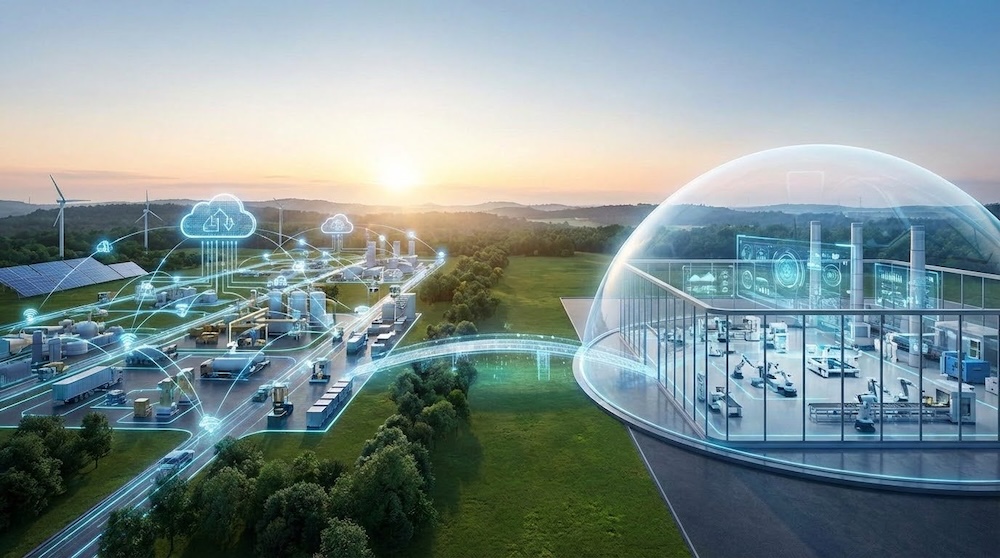
Smart manufacturing and smart factories are the strategic and operational pillars of the fourth industrial revolution. While often used interchangeably, they represent different scales of digital transformation within the industrial sector.
Understanding the distinction is critical for leaders aiming to modernize production. Smart manufacturing serves as the broad, data-driven strategy, whereas the smart factory is the physical site where that strategy is executed through automation and connectivity.
Defining the Ecosystem: The Strategic Scope of Smart Manufacturing
Smart manufacturing is an enterprise-wide strategy that leverages advanced data analytics and integrated software to optimize the entire value chain. It encompasses everything from research and development to customer delivery.
The Six Pillars: A Framework for Enterprise-Wide Intelligence
A robust smart manufacturing framework relies on six core pillars to ensure topical authority and operational success:
- Materials: Real-time tracking of raw inputs.
- People: Upskilling the workforce for digital collaboration.
- Technology: Deploying AI and cloud infrastructure.
- Processes: Streamlining workflows via automation.
- Data: Utilizing big data for predictive insights.
- Culture: Fostering an environment of continuous innovation.
Beyond the Shop Floor: Supply Chain and Life Cycle Integration
Unlike localized solutions, smart manufacturing integrates the entire product lifecycle. This includes syncing real-time demand signals from the market with procurement and logistics to eliminate waste and improve responsiveness.
The Physical Core: Engineering the Smart Factory
A smart factory is the physical production environment where machines, sensors, and humans interact through a highly connected network. It is the specific location where raw materials are transformed into finished goods using intelligent systems.
IIoT and Edge Computing: The Central Nervous System
The Industrial Internet of Things (IIoT) provides the connectivity required for machines to communicate. Edge computing processes this data locally, allowing for near-instantaneous adjustments to production parameters without the latency of cloud-only systems.
The Role of Digital Twins in Shop Floor Optimization
Digital twins serve as virtual replicas of physical assets, enabling sophisticated virtual modeling and real-time monitoring to enhance customization and sustainable practices.
These models provide significant ROI by transforming maintenance and scheduling. Predictive maintenance via digital twins can reduce equipment failures by up to 70%, while AI-driven scheduling increases asset utilization by 20-30%.
Macro Strategy vs. Micro Execution: Analyzing the Critical Distinctions
The primary difference between these concepts is the scale of implementation and the focus of their respective goals. Smart manufacturing provides the macro-level roadmap, while the smart factory handles micro-level execution.
Scope of Connectivity: Enterprise vs. Asset
Smart manufacturing connects the entire enterprise, including remote offices and global suppliers. In contrast, smart factory connectivity is centered on individual assets, production lines, and local shop floor workflows.
KPI Alignment: Business Outcomes vs. Operational Excellence
Smart manufacturing measures success through business-centric KPIs like market share and total cost of ownership. Smart factories focus on Overall Equipment Effectiveness (OEE) and labor optimization.
Advanced software like the Smart Factory Suite tracks labor activity to help managers understand optimal staffing levels and their direct impact on production efficiency.
Strategic Roadmap: Which Should Your Organization Adopt First?
Deciding where to begin depends on your organization’s current digital maturity and immediate pain points. Both approaches require a balance of innovation and collaboration.
The ‘Bottom-Up’ Approach: Starting with the Smart Factory
Many organizations begin with a bottom-up approach by digitizing a single production line. This allows for immediate gains in operational efficiency and provides a proof-of-concept for further investment.
The ‘Top-Down’ Approach: Leading with Smart Manufacturing Strategy
A top-down approach starts with a comprehensive digital strategy. This ensures that all future technology investments are compatible and aligned with long-term enterprise goals, preventing the creation of disconnected data silos.
The Engines of Intelligence: Industrial Automation and Robotics
Industrial automation provides the physical capability required to realize the goals of a smart factory. Robotics and automated systems act as the hands and feet of the digital brain.
The 4 Types of Industrial Automation: Choosing the Right Level
- Fixed Automation: High-volume, repetitive tasks with dedicated equipment.
- Programmable Automation: Systems designed for batches with varying configurations.
- Flexible Automation: Human-machine collaboration with rapid changeover capabilities.
- Integrated Automation: Fully synchronized systems controlled by a central computer.
Catalysts for Change: Why Robotic Manufacturing Is Accelerating
Robotics are becoming more versatile and accessible for smaller manufacturers. Industrial and collaborative robots enable autonomous mobility across factory floors, significantly increasing precision and efficiency.
Industry 4.0 Intelligence: Frequently Asked Questions
Navigating the complexities of modern industrial technology requires clarity on definitions and implementation hurdles.
What is the primary difference between a smart factory and smart manufacturing?
Smart manufacturing is the global strategy and business philosophy, while the smart factory is the specific geographic location where automated production occurs.
Can you have a smart factory without smart manufacturing?
Technically yes, but it often leads to localized efficiency that cannot be scaled. Without the broader manufacturing strategy, the data generated by the factory remains isolated from the rest of the business.
What are the most significant barriers to adopting these technologies?
Organizations often struggle with the human and technical elements of transformation. A recent survey noted that 92% of executives see smart manufacturing as key to competitiveness, but talent acquisition remains a challenge.
Furthermore, scaling these solutions is difficult; analysis shows that 74% of manufacturers are stuck in ‘pilot purgatory’ due to legacy systems and data silos.
Synthesizing Strategy and Execution for Long-Term Competitiveness
Achieving long-term competitiveness requires the seamless integration of smart manufacturing strategy and smart factory execution. By aligning business intelligence with shop floor automation, manufacturers can create a resilient, responsive ecosystem.
Success depends on viewing these concepts not as competing priorities, but as complementary layers of a single digital journey. Organizations that bridge the gap between strategy and execution will be best positioned to lead in the Industry 4.0 era.