
Summary
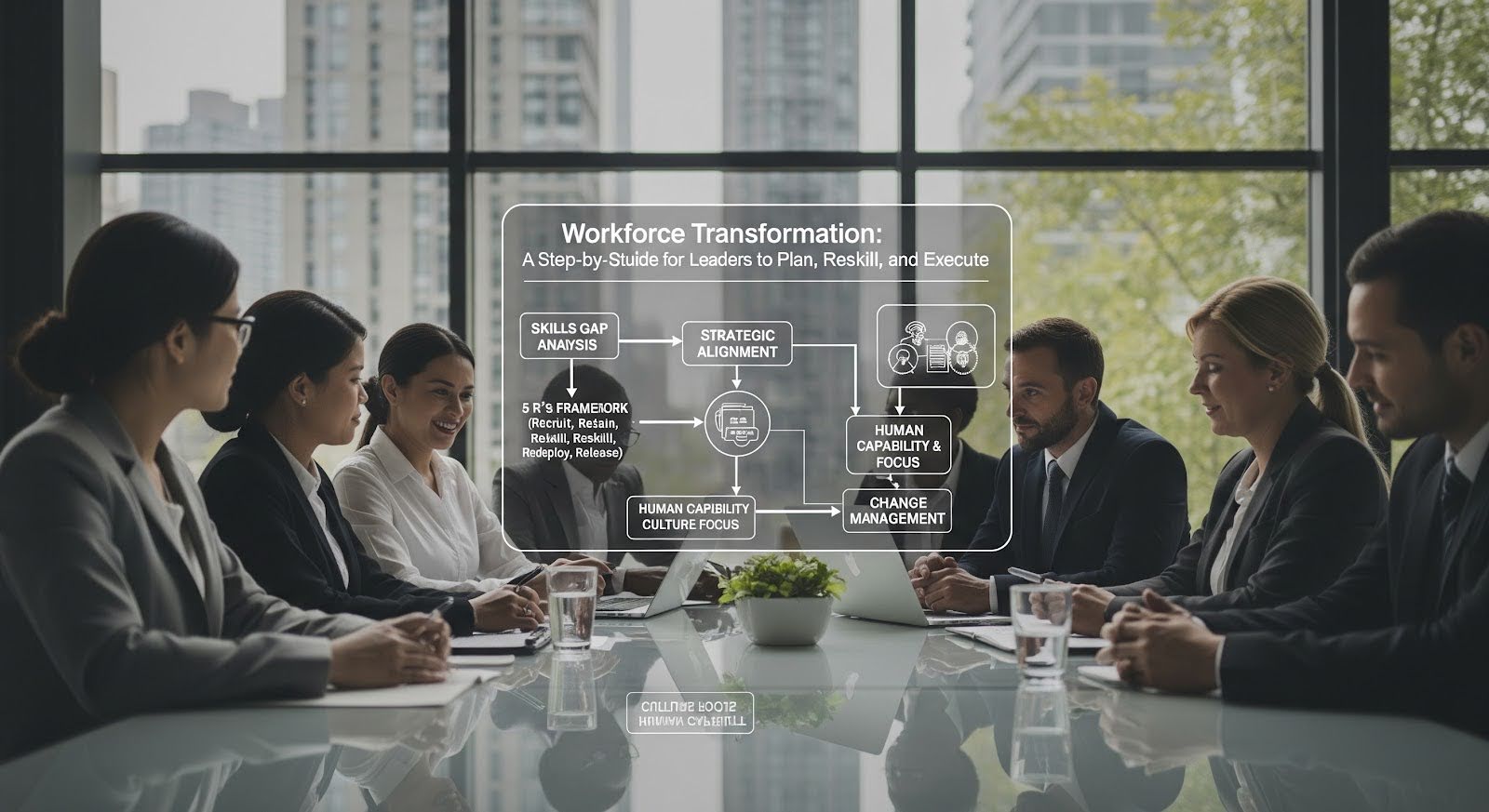
• Workforce transformation is the strategic realignment of people, skills, and culture to stay competitive in a digital environment.
• Success requires a systematic approach, including skills gap analysis and a roadmap that aligns HR with corporate strategy.
• The 5 R’s framework—Recruit, Retain, Reskill, Redeploy, and Release—serves as a foundation for modern talent management.
• Workforce transformation focuses on human capability and culture, while workplace transformation focuses on the physical or digital environment.
• Strong change management is critical, as nearly half of employees currently feel their organizations are unprepared for major shifts.
Introduction to Workforce Transformation
Workforce transformation is the strategic realignment of a company’s people, skills, and culture to meet the demands of a changing business environment. It is often driven by rapid technology shifts and evolving market needs.
This process provides a roadmap for organizations to modernize their human capital. By updating how people work, companies ensure they remain resilient and competitive during digital disruption.
How to Successfully Execute a Workforce Transformation
Successful execution requires a systematic approach to changing how people work and how the organization supports them. It is more than just installing new software; it is a fundamental shift in organizational behavior.
Conducting a Skills Gap Analysis
The first step is identifying the difference between the skills your current employees possess and the skills needed for future goals. This data-driven assessment highlights exactly where training or hiring is required.
Building a Strategic Roadmap for Change
Create a clear timeline and milestones that align HR initiatives with broader corporate strategy. This ensures that digital transformation goals are supported by the right people at the right time.
Fostering a Culture of Continuous Learning
Establish the infrastructure and psychological safety required for employees to embrace new ways of working. A culture of learning encourages staff to commit to ongoing professional development without fear of failure.
What are the 5 R’s of Workforce Planning?
The 5 R’s framework is a cornerstone of workforce planning that helps leaders categorize talent management into actionable pillars. These pillars guide how an organization shapes its team for the future.
Recruit and Retain: Securing the Right Talent
Focus on attracting new talent with critical future skills while implementing engagement strategies. Keeping high-performing employees is just as vital as finding new ones to fill emerging gaps.
Reskill and Redeploy: Maximizing Internal Potential
Training existing staff to use new technologies allows them to take on new roles within the company. Redeploying these workers to high-value areas maximizes the potential of your current workforce.
Release: Managing Strategic Exits
Leaders must identify when certain roles or skills are no longer required by the business. Managing these transitions with empathy and support maintains the organization’s reputation and cultural integrity.
Workforce vs. Workplace Transformation: Understanding the Difference
While often used interchangeably, workforce and workplace transformation represent two distinct aspects of organizational change. Understanding the difference is key to a holistic strategy.
The Meaning of Workplace Transformation
Workplace transformation focuses on the physical and digital environment where work happens. This includes office design, remote work tools, and the technology stack used for daily operations.
Why Workforce Transformation Focuses on People
Workforce transformation is centered on human capability and cultural evolution. It addresses how people behave, how they are organized, and the skills they need to drive the business forward.
Frequently Asked Questions About Workforce Transformation
What is a workforce transformation?
Workforce transformation is the holistic change of an organization’s human capital to drive business value. However, many companies struggle with this shift, as 43% of employees report that their organizations are unprepared to manage change effectively.
What is workforce transformation at PwC?
Consultancies like PwC define this process through a specific lens of integration. PwC drives workforce transformation strategy by building a trusted, human-led and tech-powered workforce.
How does workforce transformation impact ROI?
Transforming the workforce improves productivity, reduces turnover, and increases agility. Research indicates that organizations with strong change management practices are significantly more likely to meet their objectives.
What role does AI play in transforming the workforce?
Artificial Intelligence (AI) acts as a catalyst for change by automating routine tasks and creating a need for new skill sets. It forces a rewrite of job descriptions and requires employees to adapt to a tech-augmented environment.
What is the meaning of workplace transformation in a remote-first world?
In a remote-first world, workplace transformation involves moving from physical offices to hybrid or digital-first concepts. It ensures that the digital environment provides the same level of connectivity and collaboration as a physical space.
Conclusion
Workforce transformation is an ongoing journey rather than a one-time project. By focusing on the 5 R’s and following a structured roadmap, leaders can build a team capable of navigating any market shift.
The ultimate goal is to create a symbiotic relationship where the business and its employees thrive together. Maintaining a focus on both human capability and technological tools ensures long-term organizational resilience.